 Fleur and Phoebe
 Creating a Hormone-Friendly Lifestyle: Beyond Diet and Exercise
The other component to creating a hormone-friendly lifestyle are additional factors beyond diet and exercise.
You’d be surprised how often hormonal health has little to do with what you’re eating or how you’re exercising—and often, what you consume or how you exercise might be only a small percentage of the equation. Hormonal health is dependent upon a variety of synergistic factors that determine whether your hormones stay stable.
While many women might feel frustrated that they’ve tried to get their diets and exercises "right" only to still struggle with hormonal symptoms, they’re doing the "right" things, to an extent, but still lack the other components that could make or break hormonal wellness. Achieving true balance takes more into consideration about how one lives.
Sleep as a Critical Component of Hormonal Health
Sleep vs. Sleep Quality—What’s More Important?
Eight hours of sleep a night isn’t worthwhile if it’s filled with tossing and turning. Hormones are produced at various times during the specific stages of sleep, with deep sleep and REM sleep being crucial. When quality is lacking, production schedules are thrown off.
Cortisol should decline overnight and increase in the morning. When sleep quality is poor, cortisol spikes when it shouldn’t, and once awake, remains elevated. High cortisol levels interfere with insulin, thyroid hormones and reproductive hormones regardless of the effort towards diet and exercise.
Timing matters as well. Someone who goes to bed at 10pm and rises at 6am will have a better production schedule than someone who goes to bed at midnight and rises at 8am; while both scenarios equal eight hours, one is conducive to circadian rhythms forged over thousands of years.
What Contributes to a Good Night’s Sleep?
Most people are unaware of how temperature contributes to hormonal sleep better than most realize. For good quality sleep to happen, one’s core body temperature must decline; if a room is too warm, it prevents the natural process. 65-68 degrees Fahrenheit is most conducive.
Dimming the lights in the evening promotes melatonin production; this isn’t just for sleep but also for reproductive hormones; too much light in the evening due to technology screens promotes blue light which gives off sunlight signals to the brain that it’s not time for bed yet.
Stress Management That Actually Works
What is Acute Stress vs. Chronic Stress?
Acute stress—stress that’s associated with emergencies or sporadic challenges—isn’t bad for hormones. Instead, it’s chronic stress, low-level stress that never leaves us, that’s most dangerous.
The goal isn’t to eliminate stress; it’s impossible. What’s possible is reducing stress impact through resilience building and recovery strategies that challenge the body out of its baseline state to bring it back down within a reasonable amount of time.
Chronic stress promotes constant cortisol elevation which interferes with insulin sensitivity, thyroid production and reproductive hormones. Therefore, women who are constantly stressed find they can’t lose weight, their cycles are irregular or nonexistent and they’re exhausted with proper diet and exercise intact.
What are Examples of Stressors That Are Credible?
Deep breathing exercises might sound silly but studies show that in two minutes’ time they can lower cortisol levels. Therefore they should be used as a tool throughout the day—not just when people feel stressed out. Even twice a day for two minutes works wonders.
Time in nature has myriad effects beyond psychological restoration. Studies show that even short durations outside—under trees or in natural environments—can significantly decrease cortisol levels as well as inflammation markers. This doesn’t mean you have to go hiking; just standing under a tree for ten minutes will work wonders.
Natural Topical Support for Hormonal Balance
Why Topical Support Works Better Than Other Options—Oral Support!
Topical support works better than oral supplements because it bypasses digestive support and liver metabolism and works more quickly where it needs to go—the bloodstream—than hormone support that tries through the stomach.
The skin absorbs plant-based compounds better than people realize, especially with certain formulas—and those topical applications for women’s issues were used by traditional cultures long ago without the understanding that what they were doing made so much sense for internal benefit, too.
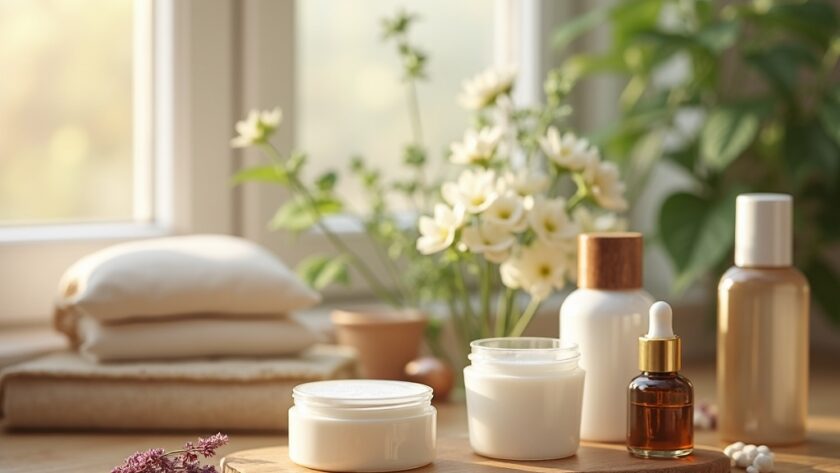
Products such as Wild Yam Cream demonstrate how topical applications can provide targeted support for hormonal comfort without the systemic effects that come with oral hormone treatments.
When is Topical Support Most Effective?
Topical support works best when it’s consistent throughout certain times rather than used sporadically throughout the month. For example, women who are still cycling might find help in using support during the luteal cycle (post ovulation) where progesterone should be highest; whereas post-menopausal women may find it easier to use daily instead of when they feel a challenge.
Environmental Factors That Impact Hormones
Where Are Common EDCs Found?
Low-level endocrine disrupting chemicals are found everywhere in modern environments—and even with diet and exercise being on par, these hormones can interfere.
Plastics, personal care products, household cleaners—all have ingredients that possess chemical analogs that mimic hormones in the body. When this happens at all times—even if each product isn’t always used—all day long, a significant challenge ensues.
What’s One Thing People Can Change?
The goal is not necessarily cumulative doses but low-level dosing over time; changes need not happen overnight—but small efforts reduce toxic burden over time.
Therefore use glass containers for food—not plastic. If microwaving food or using throwaway containers is necessary, hormone disruptive chemicals are more likely when material heats up.
Furthermore, lotions, shampoos and makeup often have parabens and phthalates that interfere—makeup that boasts natural ingredients end up being just as effective (and often more) than pharmaceutical-grade options used in medical applications.
Building Your Personalized Approach
How Should All This Be Done? One at a Time!
The goal is not to do everything at once because it’s overwhelming and counterintuitive to making everything work. Instead, one at a time should be implemented first—by focusing on getting better sleep or reducing exposure or reducing stress through empowerment measures.
Then allow several weeks for things to start working (because they’re not going to work immediately).
How Can One Track What’s Effective?
It’s easy to keep track of what feels good by tracking cumulative insights because often one feels good or bad about one thing, but not the others—and keeping track of energy levels, moods, etc. can help discover patterns over time.
Patterns emerge that make sense—and what’s beautiful for one woman might not be ideal for another—and what’s better for one woman today might not be applicable tomorrow.
Ultimately creating a hormone-friendly lifestyle revolves around multiple factors that successfully determine overall wellness regardless of health hurdles or challenges.